

Sinking Funds Explained: The Simple Way to Organize Your Money
Let me tell you something that changed the way I manage money completely.
For the longest time, money felt… chaotic.
Everything lived in the same place.
Bills.
Groceries.
Travel.
Random life things that pop up at the most inconvenient times 🙃
So every time something came up, I felt like I had to mentally negotiate with my bank account.
“Can I afford this?”
“Should this come from savings?”
“Wait… what was this money for again?”
It was honestly exhausting.
Then I discovered something that made money feel ten times calmer
Sinking funds.
And if you’ve never heard of them before, don’t worry — this is way simpler than it sounds 😌
In This Guide You’ll Learn
What sinking funds are
Why they make managing money easier
Examples of sinking funds you can create
How to start your first sinking fund
What Are Sinking Funds?
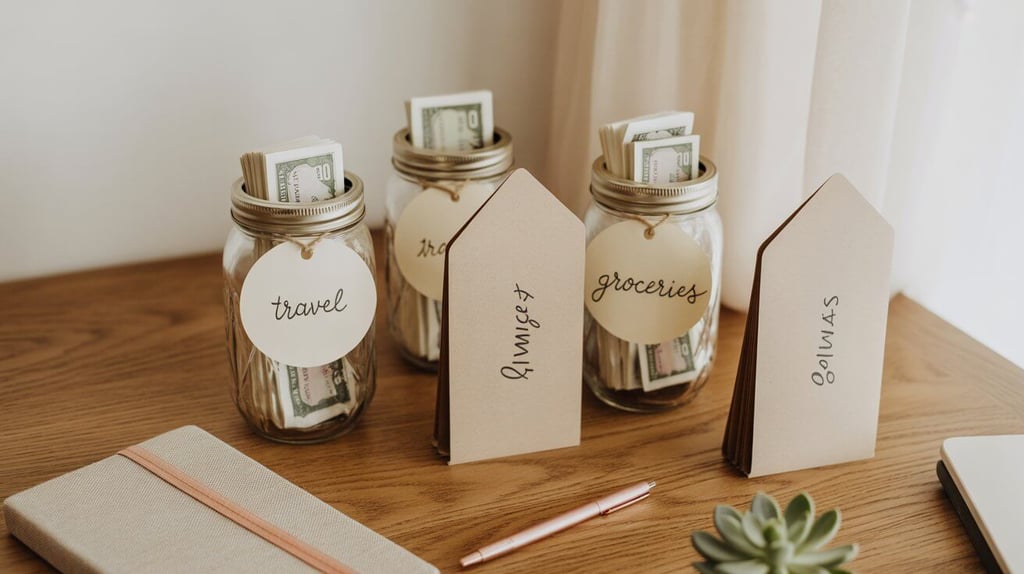
At the simplest level, sinking funds are just money pots with a job.
That’s it.
Each pot has a specific responsibility.
Instead of having one big account where everything lives together in chaos, you separate your money based on purpose.
Think of it like this:
Your money stops being one big pile and starts becoming a team of little workers.
Each one has a role.
And once you start doing this?
Money suddenly feels a lot more organised and a lot less stressful.
Sinking funds also work beautifully alongside a simple budgeting system. If budgeting has ever felt overwhelming, you might find it helpful to start with a simple budgeting approach that actually works in real life.
✨ Key Takeaway
Sinking funds are simply small money pots with a specific purpose.
Instead of scrambling for money when something happens, you’re slowly preparing for it in advance.
A Real Life Example (Vacation Fund)
Let’s say you love travelling.
Travel junkie here girlie — vacation version of me is my favourite version of me 😂✈️
Instead of scrambling for money when it’s time to book a trip, you create a Vacation Fund.
Maybe you set aside $100 each month.
You might not travel every month, but four months later?
Boom.
You have $400 ready and waiting:
Flights
Hotels
Food
Transportation
Activities
Everything is already covered.
No financial stress and definitely no post-vacation credit card regret.
And honestly?
That feeling alone is worth it.
Why Sinking Funds Work So Well
There are a few reasons I personally love this system.
1️⃣ They remove financial stress
You already planned for the expense.
So when it shows up, you’re not panicking.
You just use the pot that was made for it.
2️⃣ They stop the debt spiral
A lot of people end up in debt not because they’re irresponsible…
…but because life happens.
Car repairs.
Trips.
Medical costs.
Birthdays.
Random adulting expenses we didn’t ask for 😒
Sinking funds prepare for those before they arrive.
3️⃣ They make money feel organised
This is the biggest one for me.
When every dollar has a job, your brain relaxes.
And honestly?
Financial calm is highly underrated.
When you begin organizing money this way, it often becomes much easier to build better financial habits over time.
✨ Key Takeaway
When your money has structure, your mind has peace.
Sinking funds help your money work with your life instead of constantly reacting to it.
💛 Not Sure What Money System Works Best For You?
Sometimes the hardest part of managing money isn’t saving — it’s figuring out what system actually fits your personality and habits.
That’s why I created a short 2-minute Money Mindset Quiz to help you understand your personal money style.

Examples of Sinking Funds You Can Create
The beautiful thing about sinking funds is that they can be anything you want.
Seriously.
There are no rules here.
Your money should match your real life, not someone else’s perfect finance template.
Here are a few examples.
Vacation Fund ✈️
For travel lovers like me.
Flights
Hotels
Food
Activities
Transportation
Instead of stressing about money when it’s time to travel, everything is already set aside.
Transportation Fund 🚗
Day-to-day travel.
Bus fares
Train rides
Uber or taxis
Gas
Having this as its own pot makes monthly budgeting so much easier.
Grocery Fund 🛒
Food is a necessity.
Separating grocery money can help you avoid the classic:
“Wait… where did all my money go this month?” moment 😅
Car Maintenance Fund 🔧
If you have a car, you know things eventually need fixing.
Servicing
Repairs
Oil changes
Valets and cleaning
Instead of being caught off guard, you prepare slowly.
Eating Out or Fun Fund 🍝
Because life isn’t just bills.
This pot is for:
Dinner with friends
Random brunch plans
Spontaneous road trips
Fun activities
Even putting aside $20 or $50 a month makes a difference.
Education Fund 📚
If you’re studying or investing in learning.
Tuition
Courses
Books
Certifications
This can be incredibly helpful if you’re balancing work and education.
Rainy Day Fund vs Emergency Fund
This is where people sometimes get confused, so let’s clear it up.
These two funds are not the same thing.
Rainy Day Fund 🌧️
This is for small unexpected things.
Examples:
Fixing the fridge
A dental filling
Replacing a broken appliance
Small car repairs
It’s not a disaster.
Just life being… life.
A lot of people keep something like $500–$1,000 here.
Emergency Fund 🚨
This is for major situations:
Job loss
Medical emergencies
Major financial disruptions
Your emergency fund protects your financial stability.
Your rainy day fund protects your peace of mind for smaller surprises.
Both are important.
A rainy day fund helps cover smaller surprises, while an emergency fund is meant to protect you during bigger life disruptions like job loss or medical emergencies.
If you’re not sure how much you should actually have saved, I walk through the step-by-step method in my guide on how to build an emergency fund without stress.
How to Start Your First Sinking Fund
Starting this system is actually very simple.
You don’t need a complicated budgeting system or fancy tools.
Step 1 — Decide the categories
Choose a few areas in your life where expenses regularly appear.
Maybe:
Vacation
Groceries
Car maintenance
Fun money
Start small.
Step 2 — Choose your saving amount
Even small contributions work.
$20
$50
$100
Consistency matters more than size.
Small amounts grow quietly over time.
Step 3 — Keep the funds separate
This is important.
Each fund should have its own “home”.
Some people use apps with built-in savings pots.
Others simply create separate bank accounts.
Both work perfectly fine.
If saving money feels difficult right now, that’s completely normal. Starting small still counts. I share a few gentle ways to begin in my guide on how to start saving money even when it feels tight.
✨ Key Takeaway
You don’t need to create ten sinking funds overnight.
Start with one small fund and build from there.
Progress always begins with small, consistent steps.


How I Personally Organise My Sinking Funds
I personally use a banking app that helps me organise my funds really well. It allows you to create multiple savings pots inside one account, which makes organising money really simple.
I label them as things like:
Vacation
Travel
Groceries
Car Maintenance
Everything sits in one place but stays clearly separated.
Now if your bank doesn’t offer this feature, don’t worry.
You can absolutely do this by opening separate accounts and labelling them clearly.
For example:
Checking account → everyday spending or what I call pocket money.
Also, quick tip girl: using a bank account that tracks spending for you. This has been so helpful for me.
It makes it much easier to see where my everyday money is going i.e fast food or hair products 😶 - without having to track every single thing myself.
Savings account → sinking funds
Simple systems often work best.
Still Feeling Unsure Where To Start?
If you’re not sure which money system will work best for you, the Money Mindset Quiz can help you find your starting point.
A Small Money System That Creates Big Calm
Here’s something I noticed once I started using sinking funds.
Money felt calmer.
More organised.
More intentional.
Instead of reacting to expenses when they appeared, I started preparing for them slowly and gently.
And that shift alone made a huge difference.
✨ Final Takeaway
You don’t need ten sinking funds overnight.
Start with one.
Maybe it’s:
Vacation
Groceries
Car maintenance
Fun money
Start small and let the system grow over time.
Because when your money has a place to go…
Life starts to feel a little more organised.
And a lot less stressful 🤍